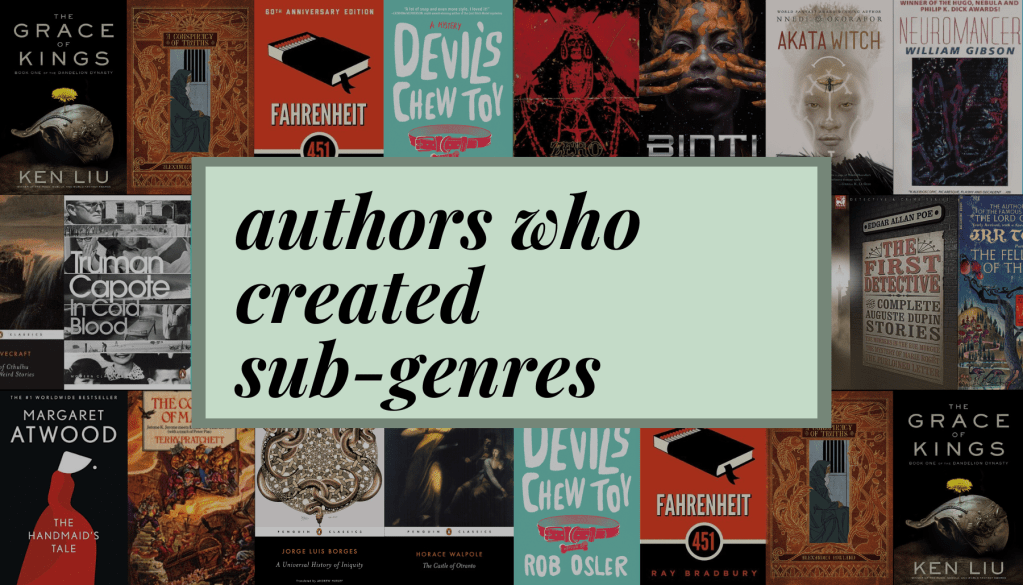
Do you know what would be so awesome? Creating your own subgenre as an author. It’s a huge honor to have something created because of you – but do you know who created your favorite subgenres? I’ve compiled a list of subgenres I like with the books and authors who are credited with creating it. And let me tell you, I was shocked I didn’t know about some of these after doing deep dives on a few of these authors.
Silkpunk: Ken Liu

Silkpunk is a subgenre of science fiction and fantasy. Similar to how steampunk pulls from Victorian England, silkpunk pulls from East Asian mythology, history, and culture. Ken Liu first coined the term to describe his Dandelion Dynasty series.
The Grace of Kings is the first book in Ken Liu’s Dandelion Dynasty series. It follows Kuni Garu, a clever outlaw, and Mata Zyndu, a noble warrior, as they lead a revolt against a tyrant. Set in a world inspired by classical China, the story blends myth, politics, and war with silkpunk inventions like airships and battle kites.
Other books in this subgenre are The Poppy War by R.F. Kuang (check trigger warnings), The Night Tiger by Yangsze Choo, and Iron Widow by Xiran Jay Zhao.
Barrio Noir: Gabino Iglesias
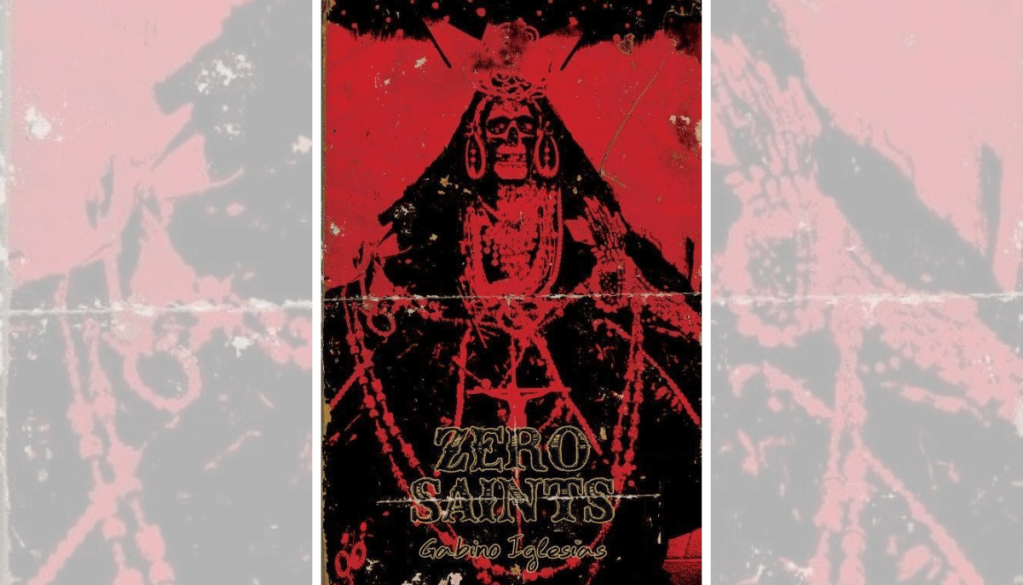
Barrio noir, first coined by Gabino Iglesias, was used to describe his blend of horror, magical realism, and noir fiction. It’s typically characterized by multicultural storytelling that explores the darker sides of society.
Iglesias’s first book in the genre is Zero Saints from 2015. It follows Fernando, a Puerto Rican ex-gang member in Austin, Texas. After a drug deal goes wrong, he’s pulled into a world of violence, vengeance, and supernatural horror, blending English and Spanish in a gritty, genre-crossing narrative.
Quozy Mystery: Rob Osler
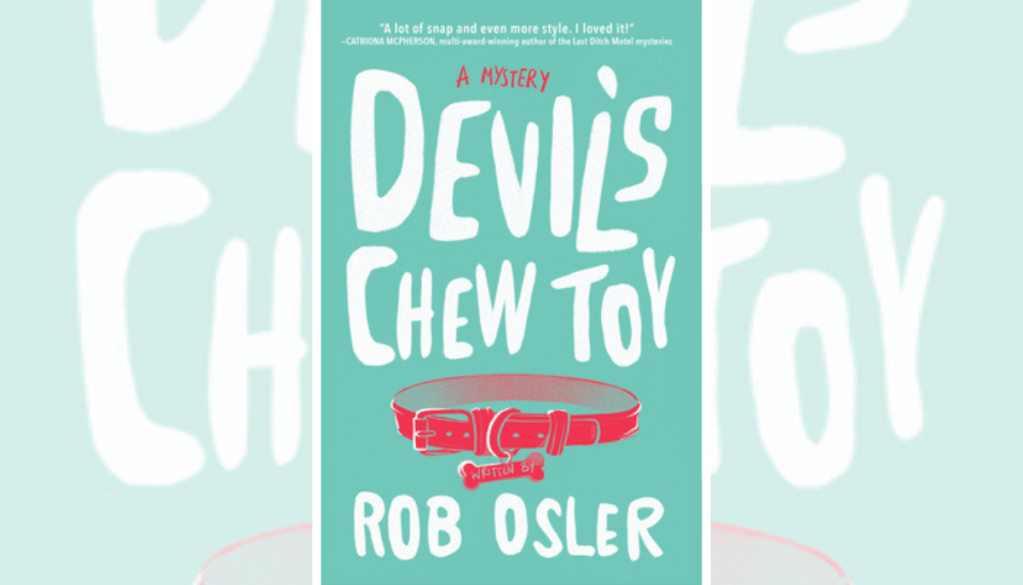
This is a subgenre of the cozy mystery subgenre. Essentially, “quozy” mysteries are cozy mysteries focused on queer characters. It’s credited to have been coined by author Rob Osler.
Osler’s book, Devil’s Chew Toy, is a great example of quozy. The novel follows Hayden, a shy blogger, who gets caught up in a missing persons case after a one-night stand disappears. With the help of his quirky friends, he uncovers secrets, danger, and unexpected courage.
Africanfuturism and Africanjujuism: Nnedi Okorafor
While having distinct differences, Africanfuturism and Africanjujuism are similar in that they pull from African culture, mythology, and history. Africanfuturism is a subgenre of science fiction – think Wakanda in Marvel. Meanwhile, Africanjujuism is a subgenre in fantasy.
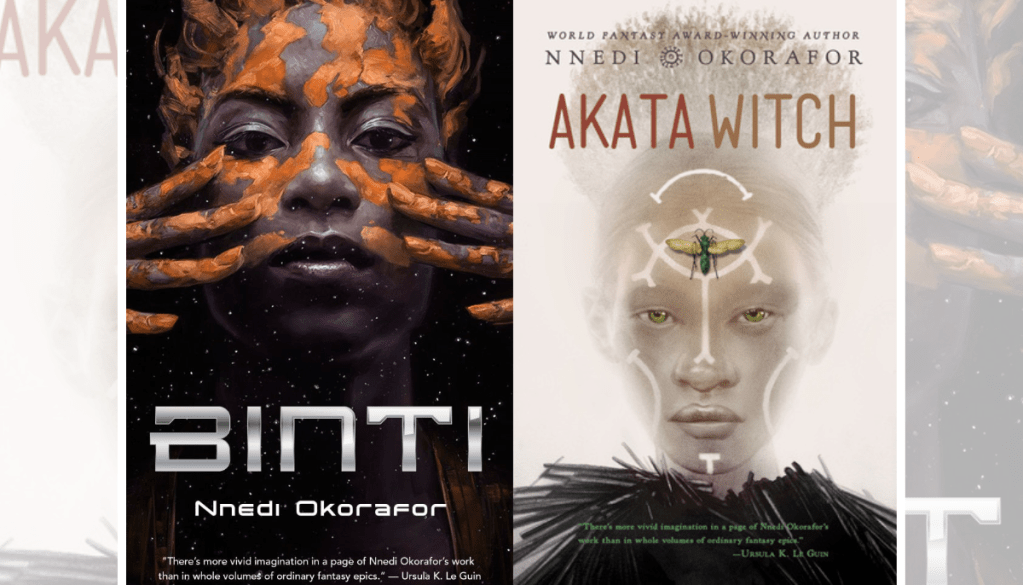
Nigerian American author Nnedi Okorafor coined both terms, but she’s far from the only author writing these subgenres. Okorafor’s Binti novella series are a great example of Africanfuturism. It follows a young woman who finds herself in the middle of a deadly conflict when she’s the first of her people to attend an intergalactic university.
If you’re looking for Africanjujuism, Okorafor’s Akata Witch is perfect for you. It follows Sunny, an American-born Nigerian girl with albinism, who discovers she has magical abilities and joins a secret society to stop a deadly killer threatening the magical and human worlds.
Read More: Tired of England-Inspired Fantasy Worlds? Try These Fantasies Instead
Hopepunk: Alexandra Rowland
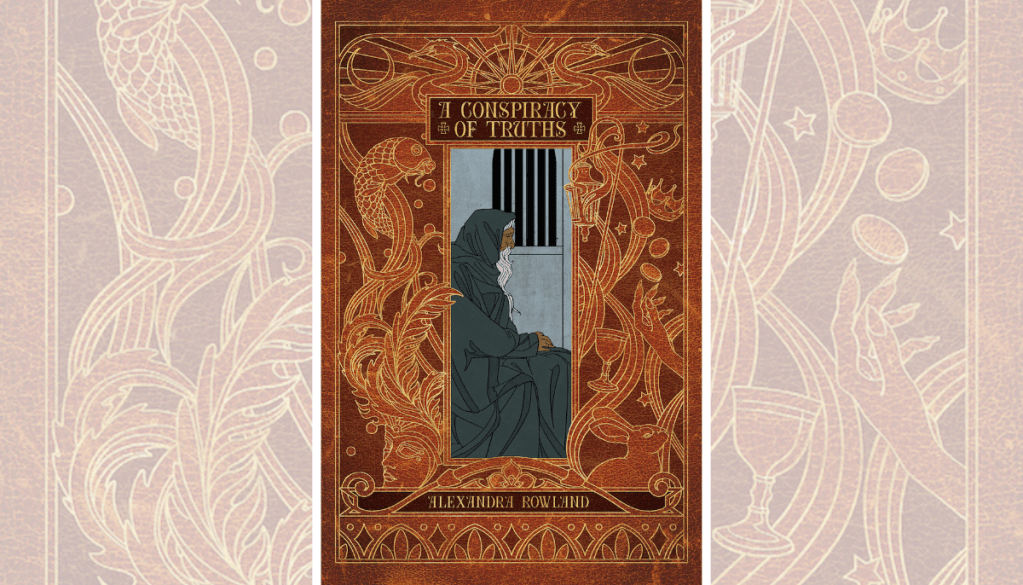
We are all probably a little familiar with grimdark, which focuses on dark and dreary science-fiction/fantasy stories. But hopepunk is the opposite. Coined by Alexandra Rowland, it’s a subgenre that focuses on positive narratives full of optimism, hope, and kindness.
Rowland’s A Conspiracy of Truths is one example of the subgenre. In it, Chant, an elderly storyteller, is arrested in a foreign land on charges of witchcraft and espionage. Facing execution, he has to rely on his storytelling skills to navigate the political nature of his captors and save his life.
Cyberpunk: William Gibson and Bruce Bethke
The cyberpunk genre is set in dystopic futures (we’ll get to dystopian in a bit) and heavily features cybernetics and technology. There’s also an aesthetic, typically neon lights and dark cityscapes, that we all recognize immediately.
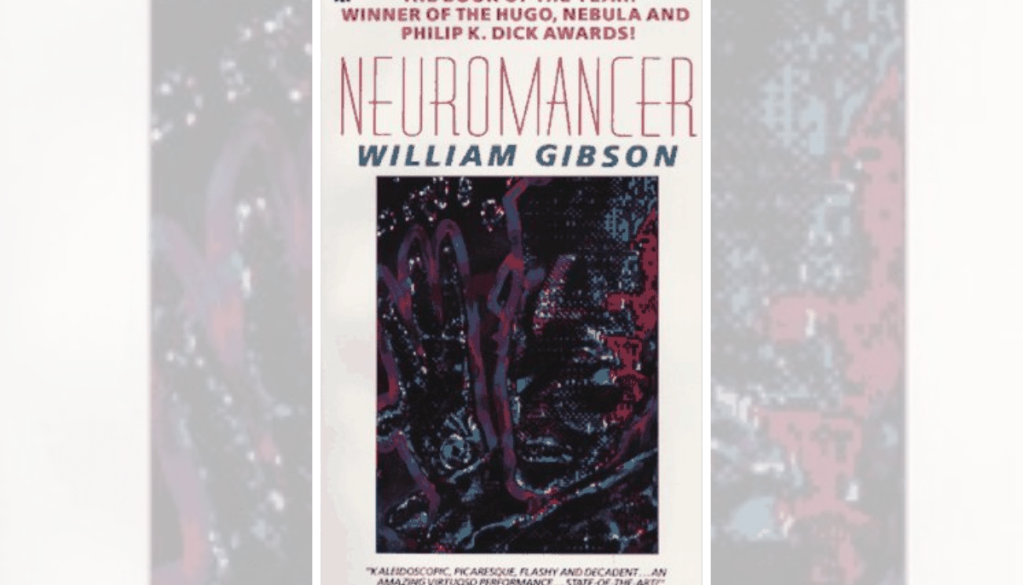
This might be one of the most popular science-fiction subgenres. There’s two contradicting claims of the origins: William Gibson and Bruce Bethke. Some say Bethke coined it with his 1982 short story, while Gibson is credited with solidifying the genre with Neuromancer.
In Neuromancer, Case, a washed-up computer hacker, is hired by a mysterious employer for a high-stakes job that drags in into deep cyberspace. To survive, he has to navigate AI, corporate espionage, and a decaying world.
Cosmic horror: H.P. Lovecraft
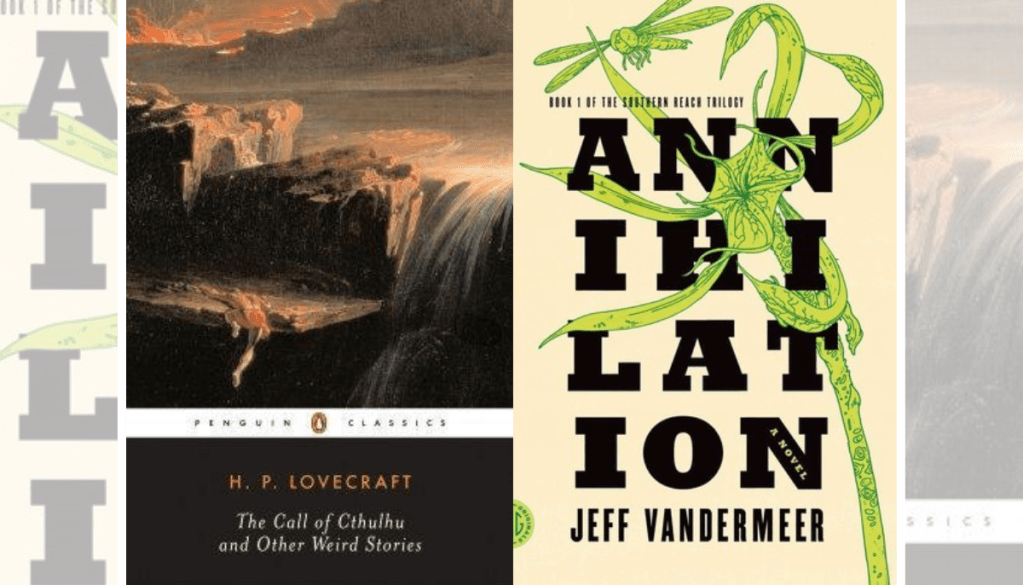
I personally don’t want to give anymore attention to such a problematic author such as Lovecraft, but I do have to touch on it. He created the subgenre that haunts so many people and inspired so many other genres. Alright, that’s it for the man.
Cosmic horror is a subgenre of horror that features eldritch entities and forbidden knowledges that lay beyond human understanding. Some key creatures are Cthulhu and the Great Old Ones, and most works often feature cults and secret societies.
Other than Lovecraft’s works, an example of this subgenre is Annihilation by Jeff VanderMeer. The novel follows a biologist on a mysterious expedition into Area X, a strange and uncharted zone where the laws of nature break down and nothing is what it seems.
Read More: Read Through the Rainbow: Horror and Thriller
Dystopian: John Stuart Mill
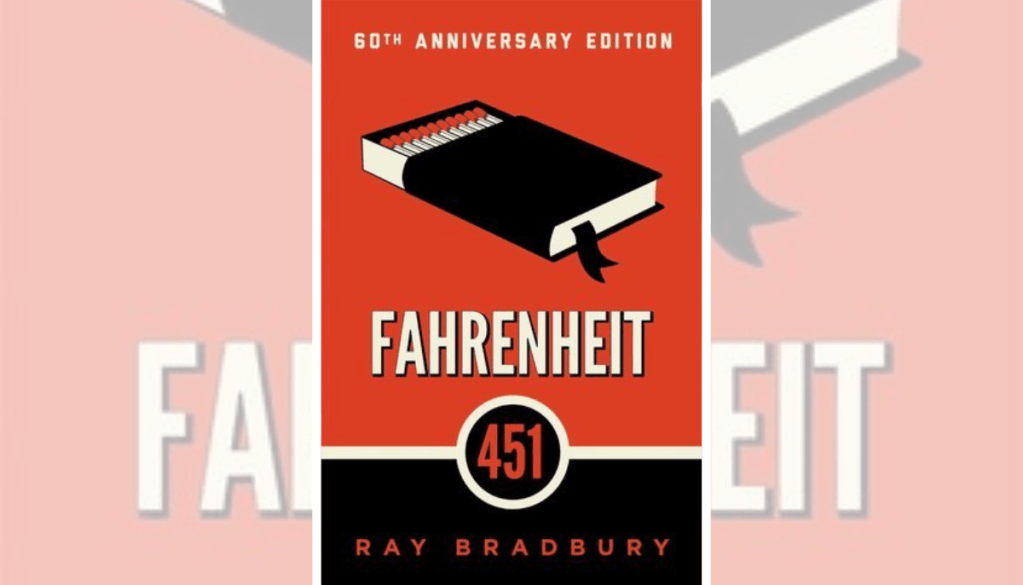
Earlier, we talked about cyberpunk, but it’s time for the broader umbrella that’s nestled under. Dystopian works are essentially the opposite of utopian. In a dystopian novel, you’ll see oppressive governments and typically commentary on the world we live in.
Ray Bradbury did not coin the term – that dates back to John Stuart Mill in 1868 – but he is credited with creating a dystopian work that still resonates today. Fahrenheit 451 is set in a future where books are banned and burned, and it follows fireman Guy Montag as he begins to question his role and seek truth in a society that suppresses knowledge. Sound familiar?
Creative Non-Fiction: Truman Capote
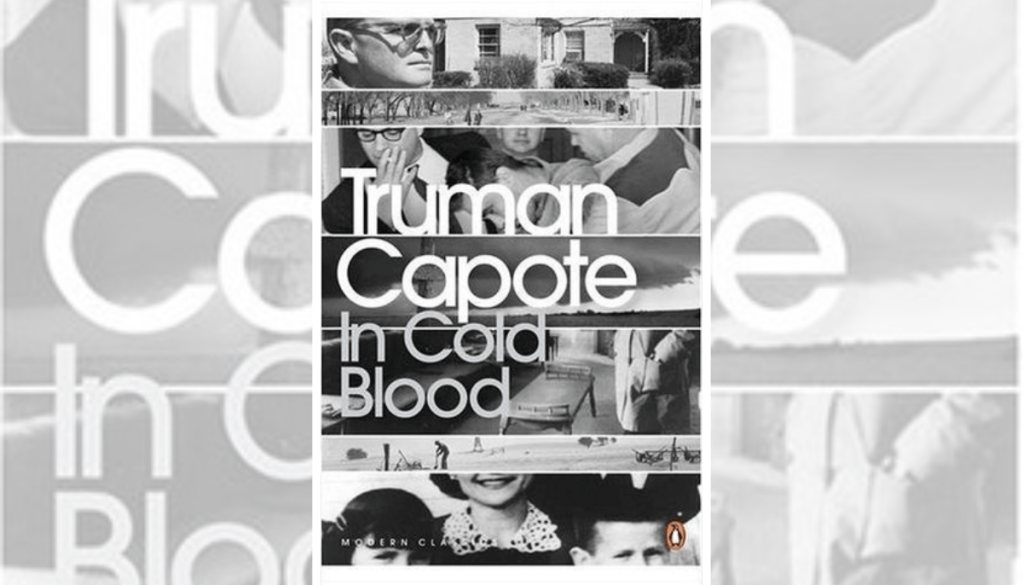
Creative non-fiction is exactly what it sounds. And because I can’t put it any better, in the words of Lee Gutkind, creative nonfiction writers’s goal “is to communicate information…but to shape it in a way that reads like fiction.”
Lee Gutkind coined the term, but Truman Capote is credited constantly for being the most prominent of the early creative nonfiction. His In Cold Blood reconstructs the brutal 1959 murder of a Kansas family and the lives of two killers.
Detective Fiction: Edgar Allan Poe
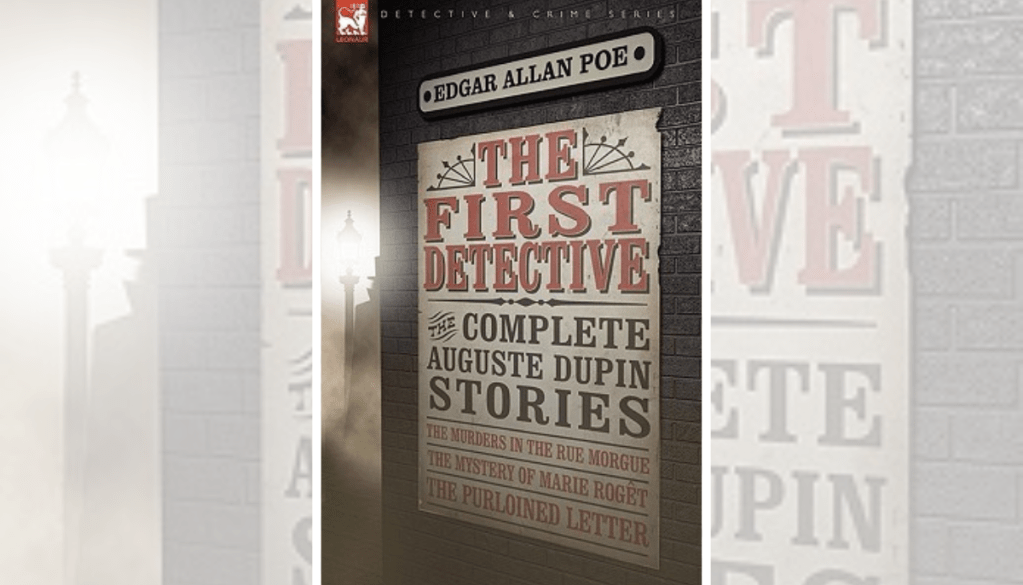
When you hear Edgar Allan Poe, you probably think of horror and psychological works. But he’s also credited with the first modern detective story that paved the way for other detective fiction works.
Poe’s The First Detective collects all of his short story following detective C. Auguste Dupin. The first short story in the book introduces Dupin as he solves a gruesome double murder in Paris.
Modern high fantasy: J.R.R. Tolkien
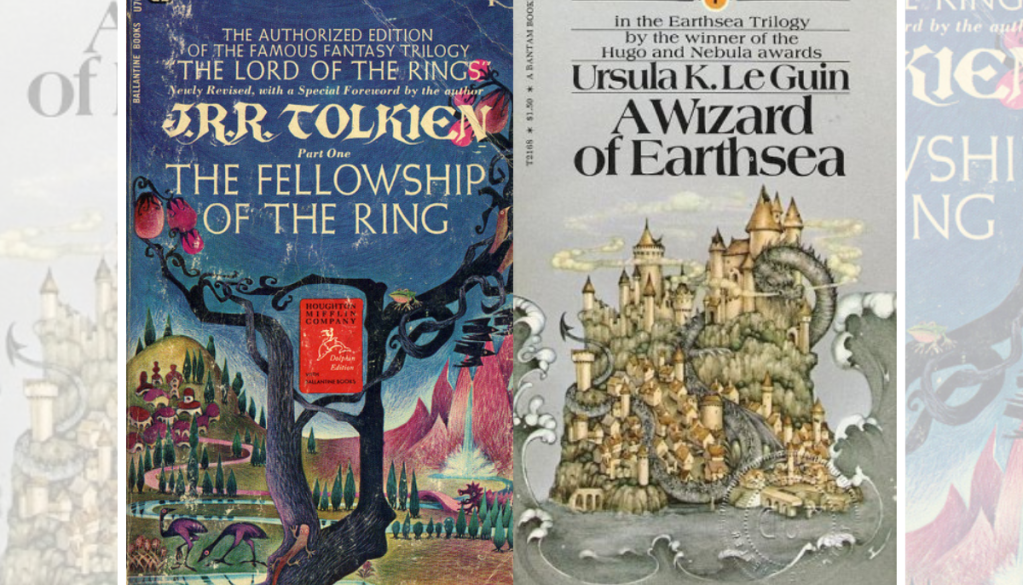
Fantasy is nothing new. It’s been around since the beginning of time, if we’re being honest. But the high fantasy we recognize today is credited with being created by J.R.R. Tolkien. High fantasy takes place in another world and typically features magic and mythical creatures.
For more, read my blog article on different science-fiction and fantasy genres.
Because Tolkien’s works are so prolific and far-reaching, I’m going to recommend you check out this other early high fantasy work. Ursula K. Le Guin’s The Earthsea Trilogy is credited as being one of the best female-written works, specifically within fantasy, ever.
The Earthsea Trilogy follows Ged, a gifted boy who grows into a powerful wizard, as he journeys across an archipelago to confront shadowy forces, grapple with destiny and identity, and learn the true cost of power.
Comedic Fantasy: Terry Pratchett
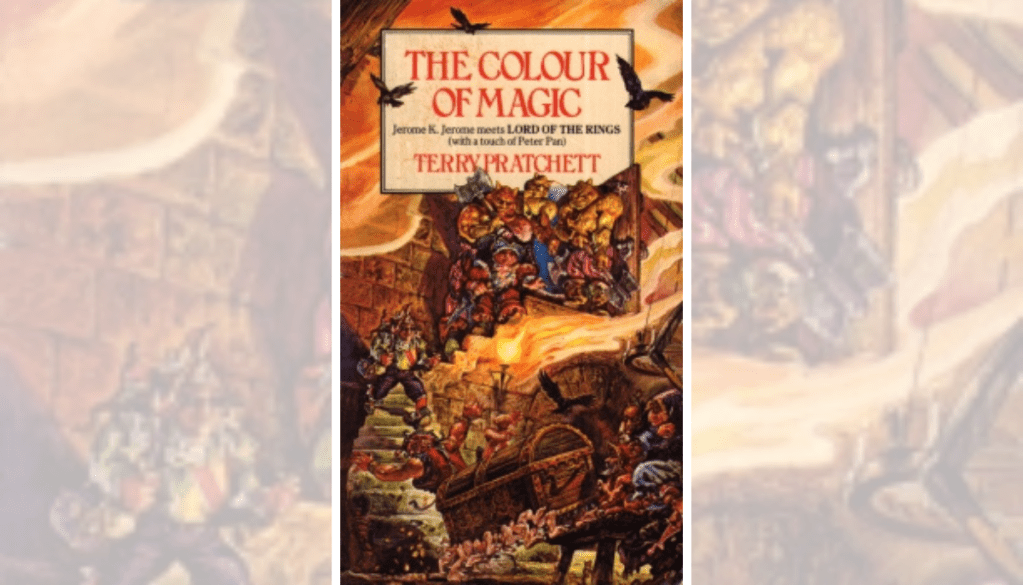
Comedic fantasy, or comic fantasy, is a genre I don’t typically reach for. It’s a subgenre that incorporates satire, parody, or slapstick humor to entertain the readers while set in fantasy stories. And that humor can range from light-hearted to dark humor.
The subgenre has been around since the nineteenth century, but the modern version we see today was made popular with Terry Pratchett’s Discworld series. It features a flat world balanced on the back of four elephants on top of a giant turtle.
Speculative Fiction: Margaret Atwood
This is the broadest subgenre within fiction because it doesn’t matter if it’s fantasy, horror, or science fiction; it’s probably going to be speculative. Essentially, at its core, speculative fiction is answering the question of “what if”. Dystopian is typically always speculative fiction, as well as alternate history works.
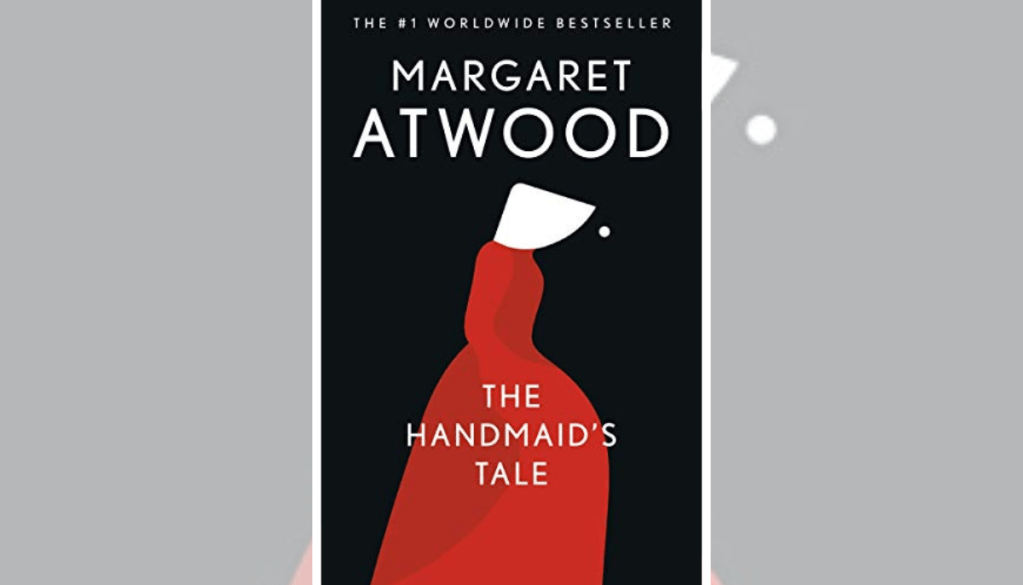
While Robert A. Heinlein was credited with creating the term in 1947, Margaret Atwood is credited as making the genre what it is. I would say The Handmaid’s Tale is her most popular work (ironically, it’s a banned book).
The Handmaid’s Tale is set in a dystopic Republic of Gilead where women’s rights have been stripped away and fertile women, called Handmaids, are forced to bear children for the ruling elite. It’s told through the eyes of Offred, a Handmaid resisting the regime in quiet defiance.
Magical Realism: Jorge Luis Borges
Magical realism is a subgenre of low fantasy that I have been trying to get into recently. It seamlessly blends fantasy or supernatural elements into a realistic setting, often treating magic as normal. It’s also heavily associated with Latin American works, but it’s in other cultures’ works, as well.
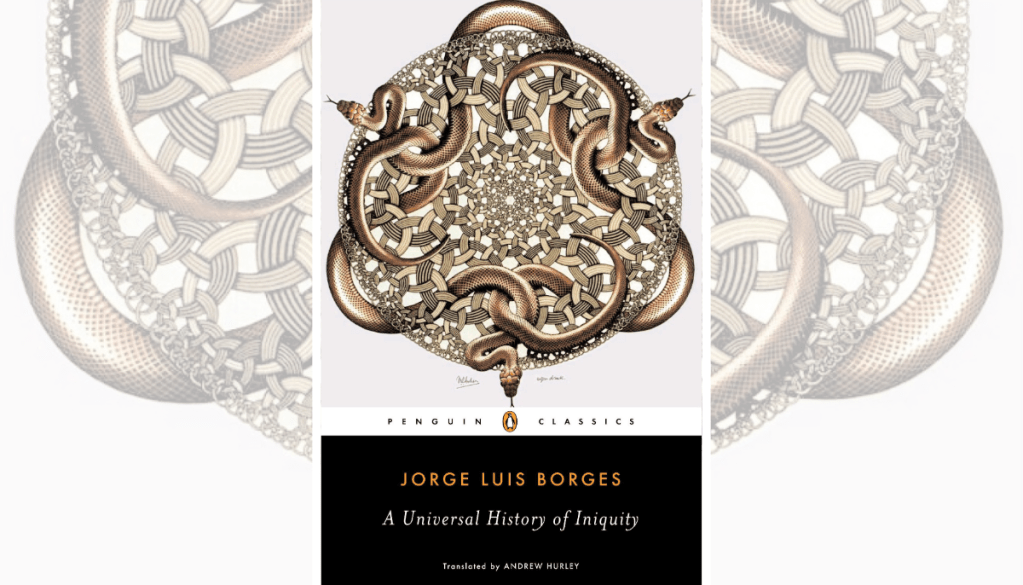
Jorge Luis Borges is widely credited as a key figure in developing the subgenre. His novel Historia Universal de la Infamia (translated to A Universal History of Infamy) is his first to be in the genre.
The novel itself is a collection of stylized, semi-fictionalized biographies that blend fact and fiction to explore infamous criminals, tricksters, and outcasts. Originally written in Spanish, it was translated twice into English.
Read More: My Favorite and Least Favorite Tropes in Fantasy
Gothic horror: Horace Walpole
This subgenre blends horror, mystery, and supernatural elements into one, typically set in dark or decaying settings. It usually focuses on psychological unease and explores themes like morality, death, and decay of societal structures.
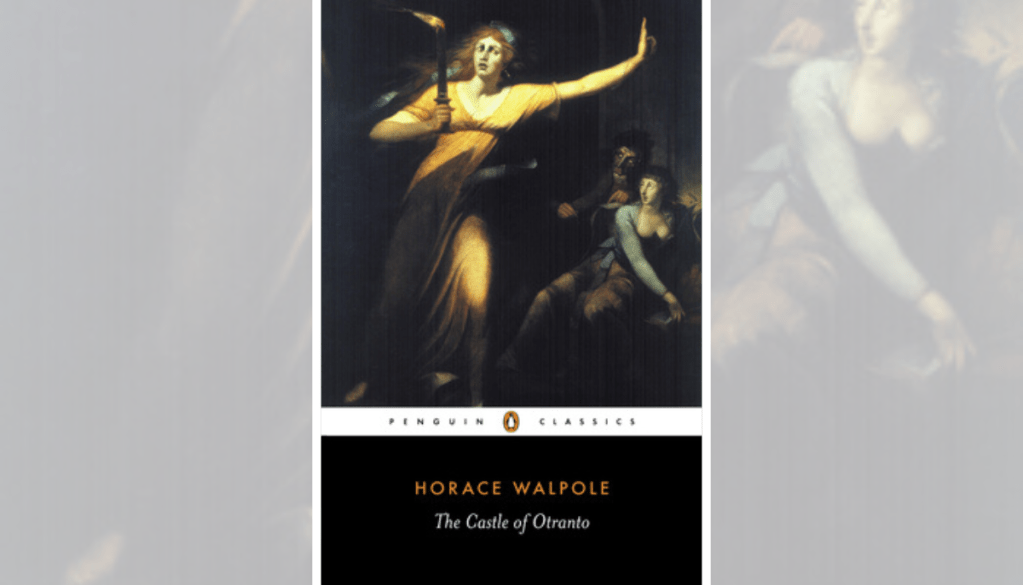
Horace Walpole is credited with creating the genre with his novel The Castle of Otranto. It follows Manfred, a scheming nobleman, as he tries to secure his family’s legacy, only to be haunted by forces tied to an ancient prophecy.
Which of these is your favorite? And which are you looking forward to exploring?




 Kait Mae
Leave a comment